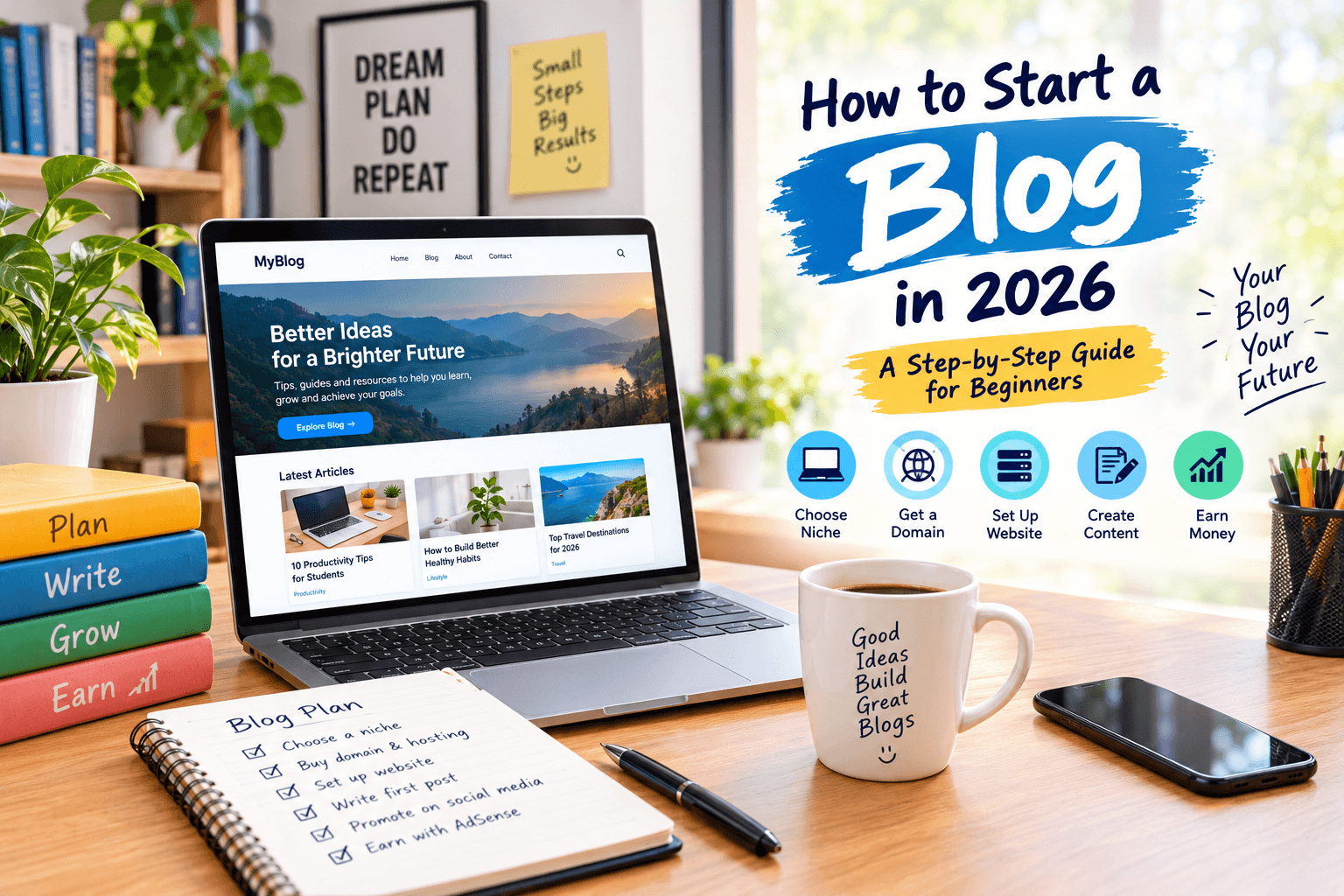
How to Start a Blog in 2026: A Step-by-Step Guide for Beginners
Learning how to start a blog in 2026 can be an exciting way to share your knowledge, build an online audience, and create opportunities to earn money. Whether you want to write about technology, education, travel, personal development, or another subject, a blog gives you a platform to publish useful information and connect with readers around the world.
However, starting a successful blog involves more than writing articles and publishing them online. You need to choose a clear topic, understand your audience, create a user-friendly website, learn basic search engine optimization (SEO), and consistently publish valuable content.
The good news is that you do not need to be a professional writer or developer to begin. With a practical plan and a willingness to learn, you can build a blog from scratch.
In this guide, you will learn how to start a blog step by step, choose a suitable blogging platform, publish your first articles, attract visitors, and explore monetization options such as Google AdSense.
1. Choose a Blog Niche
The first step in learning how to start a blog is choosing your niche. A niche is the main subject your website covers and the audience you want to serve.
For example, instead of writing about every topic, you could focus on helping students discover useful learning resources or teaching beginners how to build websites.
A clear niche makes it easier to plan content, understand readers' needs, and establish a recognizable identity.
Popular Blog Niche Ideas for 2026
Here are several areas you could explore:
- Technology: Software tutorials, useful apps, cybersecurity basics, and technology explainers.
- Education: Study techniques, learning resources, student productivity, and career preparation.
- Personal development: Time management, goal setting, habits, and productivity.
- Home and gardening: Indoor plants, balcony gardening, small-space organization, and beginner gardening guides.
- Food and cooking: Recipes, meal planning, cooking techniques, and ingredient guides.
- Travel: Destination guides, travel planning, packing tips, and local experiences.
- Blogging and digital skills: Website tutorials, SEO basics, content creation, and beginner freelancing guides.
How to Choose the Right Niche
Before committing to a topic, ask yourself three questions:
- Can I create useful content about this subject consistently?
- Are people searching for answers or information in this area?
- Can I offer something distinctive compared with existing websites?
Research the questions readers ask, the quality of competing articles, and the range of topics you could cover.
You do not necessarily need a completely new niche. You need a useful perspective, a clearly defined audience, and content that provides real value.
2. Choose a Name and Domain for Your Blog
Your blog name helps readers recognize your website. A good name should be memorable, easy to spell, and suitable for your chosen niche.
For example, a website about gardening might use a name related to plants, home gardens, or growing techniques.
Tips for Choosing a Blog Name
- Keep it relatively short and easy to remember.
- Avoid confusing spelling and unnecessary hyphens.
- Choose a name that fits your content and audience.
- Check whether the matching domain is available.
- Review potential trademark conflicts before using a name commercially.
A domain is your website's address, such as example.com. Many bloggers choose a .com domain because it is widely recognized, but other suitable domain extensions can also work.
You can check domain availability through domain registrars. Compare renewal prices, privacy options, and registration terms before purchasing.
You do not need to spend a large amount on branding at the beginning. Focus on selecting a clear identity and building a useful website.
3. Select a Blogging Platform
Your blogging platform determines how you create, organize, and publish articles.
Several options are suitable for beginners, but the right choice depends on your budget, technical comfort, and long-term plans.
WordPress
WordPress is a flexible publishing platform with themes, plugins, and customization options. A self-hosted WordPress website typically requires a domain and web hosting.
It can be a strong option if you want greater control over your website, technical settings, and future monetization.
Blogger
Blogger is a hosted blogging service that lets beginners publish posts without managing a separate hosting server. It can be useful if you want a relatively simple and low-cost starting point.
Blogger also supports an AdSense integration for eligible blogs, subject to applicable requirements and policies.
Other Website Builders
Website builders and hosted publishing platforms may offer visual editors, templates, and managed hosting. Compare their blogging features, ownership terms, export options, pricing, and advertising restrictions before choosing one.
Which Platform Should You Choose?
If you want extensive customization and plan to develop a long-term publishing business, self-hosted WordPress is worth considering.
If you prefer a simpler setup with minimal technical maintenance, Blogger or a suitable hosted platform may be more convenient.
The best platform is one you can manage consistently while providing a good experience for your readers.
4. Get Hosting and Set Up Your Website
If you choose a self-hosted WordPress blog, you will need web hosting. Hosting stores your website's files and makes them available to visitors.
What to Look for in a Hosting Provider
Compare providers based on:
- Reliability and uptime
- Loading speed and server performance
- Security features and backups
- Customer support
- SSL certificate availability
- Renewal costs and resource limits
- Ease of installing and updating WordPress
Avoid choosing a provider based only on a low introductory price. Check the renewal price and any additional charges.
Basic WordPress Setup
After purchasing your domain and hosting:
- Connect your domain to your hosting account.
- Install WordPress through your hosting dashboard or the provider's setup process.
- Sign in to your WordPress administration area.
- Choose a clean, responsive theme.
- Configure your site title, timezone, and permalink structure.
- Create your main navigation and essential pages.
- Test the website on desktop and mobile devices.
Use a lightweight theme and only install plugins that serve a clear purpose. Too many unnecessary plugins can increase maintenance and compatibility problems.
If you choose a hosted platform, follow its setup instructions instead of purchasing separate hosting unnecessarily.
5. Design Your Blog for a Better User Experience
Your blog design should make it easy for readers to find and understand your content. A complicated design can distract visitors from the information they came to read.
Start with a simple layout, readable typography, clear headings, and enough spacing between sections.
Essential Pages to Create
Most blogs benefit from the following pages:
- About: Explain who runs the blog and what readers can learn from it.
- Contact: Provide a practical way to get in touch.
- Privacy Policy: Explain relevant data collection and privacy practices.
- Terms and Conditions: Describe applicable website terms where appropriate.
- Affiliate Disclosure: Explain affiliate relationships if you use affiliate links.
Make sure these pages accurately reflect how your website operates and comply with applicable legal requirements.
Improve Mobile Usability
Many visitors browse websites on smartphones. Check that your text is readable, navigation works, images fit the screen, and links are easy to tap.
Avoid intrusive pop-ups, misleading buttons, excessive advertisements, and design elements that make articles difficult to read.
A clean and accessible website supports both readers and your long-term publishing goals.
6. Research Keywords Before Writing Articles
Keyword research helps you understand the phrases people use when searching for information.
For example, someone interested in blogging might search for "how to start a blog," "best free blogging platforms," or "how to write a blog post."
These searches indicate different needs. A person searching for a beginner guide may want step-by-step instructions, while someone comparing platforms may want a feature comparison.
How to Find Blog Keywords
Start by writing down the questions your target audience might ask. Then use tools such as Google Trends, Google Search suggestions, or keyword research platforms to explore related searches.
Evaluate:
- Search intent: What does the reader want to accomplish?
- Competition: Are the existing results difficult to compete with?
- Relevance: Does the keyword match your website's subject?
- Content opportunity: Can you create a genuinely useful answer?
- Related questions: What additional information would help the reader?
New blogs often benefit from targeting specific, question-based topics rather than competing immediately for extremely broad keywords.
Do not choose topics based only on estimated search volume. Relevance, content quality, and your ability to answer the question matter too.
7. Publish Helpful, Original Blog Articles
Content is the foundation of your blog. Your articles should answer readers' questions clearly and provide information that helps them make decisions or complete tasks.
How to Structure a Blog Post
A practical article structure includes:
- A clear, descriptive title.
- An introduction that explains what the reader will learn.
- Relevant H2 and H3 headings.
- Useful explanations, examples, and actionable steps.
- Internal and trustworthy external links where appropriate.
- A concise conclusion.
- FAQs when they address genuine reader questions.
For example, an article about choosing a blogging platform should explain the differences between suitable options, identify their limitations, and help readers select one based on their needs.
How Long Should a Blog Post Be?
There is no universal word count that guarantees good rankings. Some questions need a short answer, while more complicated topics require a detailed guide.
Write enough to answer the topic properly without adding repetitive paragraphs just to increase length.
Proofread your work, verify factual claims, and update information when products, prices, or policies change.
Can You Use AI to Write Blog Articles?
AI tools can help with brainstorming, outlines, editing, and research organization. However, automatically generated text is not a substitute for checking facts and creating useful content.
Review every article carefully. Add original explanations, practical examples, relevant experience where available, and reliable sources for important claims.
Avoid publishing large quantities of repetitive or unhelpful content simply to manipulate search rankings. Your priority should be helping readers.
8. Optimize Your Blog for SEO
Search engine optimization helps search engines understand your content and can help readers discover it through relevant searches. SEO does not guarantee that a page will rank or receive traffic.
On-Page SEO Basics
For every important article:
- Write a clear and descriptive title.
- Use the main keyword naturally in relevant places.
- Organize content with logical headings.
- Write a useful meta description.
- Create a short, readable URL.
- Add relevant internal links.
- Use descriptive image alt text.
- Make sure the page works well on mobile devices.
Avoid keyword stuffing. Repeating the same phrase excessively can make an article less useful and less natural to read.
Improve Technical SEO
Check that your website loads reliably, uses HTTPS, and allows search engines to access important pages.
Set up Google Search Console to monitor indexing and search performance. Submit your sitemap if appropriate and review any indexing problems reported by the tool.
You can also use web analytics to understand which pages attract visitors and how people interact with your content.
For detailed guidance, consult Google's official SEO Starter Guide: https://developers.google.com/search/docs/fundamentals/seo-starter-guide
9. Promote Your Blog and Attract Readers
Publishing an article is only the beginning. Readers need ways to discover it.
Use Search Engine Optimization
Continue publishing useful content around related topics. Link relevant articles together so visitors can explore your website and understand how the information connects.
SEO usually takes time, and results vary by website, competition, and topic.
Share Content on Relevant Social Platforms
Share your articles in places where your target audience already spends time. For example, visual content may suit Pinterest, while professional tutorials may be relevant to LinkedIn or specialized communities.
Follow each platform's rules and avoid spammy posting practices.
Build an Email Audience
An email newsletter can help readers return when you publish new articles. Offer useful updates and explain what subscribers can expect.
Collect email addresses responsibly and provide a clear unsubscribe option.
Update Older Articles
Review your existing posts periodically. Correct outdated information, improve unclear explanations, replace broken links, and add genuinely useful details when needed.
A smaller collection of well-maintained articles can be more valuable than a large archive of neglected posts.
10. Make Money from Your Blog with Google AdSense
Once your blog provides useful content and attracts readers, you can explore monetization options.
Google AdSense allows eligible publishers to display advertisements on their websites. Revenue varies depending on factors such as audience location, advertiser demand, content topic, ad format, and visitor behavior.
How to Prepare for AdSense
Before applying, review Google's current requirements and publisher policies.
Make sure your website contains original content that you own or have the necessary rights to publish. Check that your navigation works, important pages are accessible, and your site provides a useful experience.
Complete the application and site-review process through the official AdSense service. Approval is not guaranteed, and you may need to address issues before ads can be served.
Official resource: https://support.google.com/adsense/answer/10162
Other Ways to Monetize a Blog
AdSense is not the only possible income source. Depending on your niche and audience, you may also explore:
- Affiliate marketing
- Sponsored articles
- Digital products
- E-books and online courses
- Paid subscriptions
- Relevant services or consulting
Disclose commercial relationships where required and make recommendations based on genuine relevance to your audience.
How Much Can a New Blog Earn?
There is no reliable universal income figure for a new blog. Some websites earn little or nothing for a long time, while others develop revenue as their audience grows.
Do not assume that a particular number of visitors guarantees a specific amount of money. Focus first on useful content, relevant traffic, and a sustainable publishing routine.
A Simple 30-Day Blogging Plan
If you are unsure where to begin, use this practical schedule.
Week 1: Plan Your Blog
Choose your niche, research your audience, brainstorm article topics, and select a name and platform.
Week 2: Build Your Website
Set up your blog, choose a clean design, configure navigation, and publish your essential pages.
Week 3: Write Your First Articles
Publish a small collection of useful, related articles. Review titles, headings, images, internal links, and mobile usability.
Week 4: Start Promoting Your Content
Set up Google Search Console, share relevant articles, review website performance, and prepare your next group of topics.
This plan provides a starting structure, not a guarantee of traffic or income within 30 days. Continue improving your website as you learn what readers need.
Frequently Asked Questions About Starting a Blog
Can I start a blog for free in 2026?
Yes. Hosted services such as Blogger offer ways to begin without purchasing separate hosting. However, free plans may have limitations in customization, branding, features, or control. A custom domain and self-hosted website may offer more flexibility but involve additional costs.
Is blogging still worth starting in 2026?
Blogging can still be useful for sharing knowledge, building an audience, and creating business opportunities. Success depends on the value you provide, your topic, competition, promotion, and consistency. There is no guarantee that every blog will attract substantial traffic or income.
How many articles should I publish before applying for AdSense?
Google does not provide a universal article-count guarantee for approval. Instead of focusing on an arbitrary number, ensure your website has useful original content, clear navigation, and compliance with current program policies.
How long does it take for a new blog to get traffic?
The timeline varies considerably. Some pages may appear in search results relatively quickly, while meaningful organic traffic can take months or longer to develop. Competition, website quality, topic selection, and content usefulness all influence results.
Do I need to know coding to start a blog?
No. Many blogging platforms provide visual editors and ready-made themes. Basic technical knowledge can help with customization and troubleshooting, but beginners can start without being professional developers.
Should I write in English or my native language?
Choose the language that best serves your intended audience and allows you to create clear, accurate content. English can help you reach international readers, but it also brings competition. A native-language blog may serve a more specific audience. Your decision should depend on demand, expertise, and content quality.
Can I use AI-generated content on my blog?
AI can support writing and research workflows, but content must still be useful, accurate, and compliant with applicable search and advertising policies. Review AI-generated information, verify claims, and add meaningful value instead of publishing repetitive material at scale.
What is the best niche for a beginner blogger?
There is no single best niche for everyone. Choose a subject with a defined audience, enough useful topics, and a reasonable connection to your knowledge and interests. Research demand and competition before committing.
Conclusion
Learning how to start a blog in 2026 does not require advanced technical skills or a large initial investment. You can begin by choosing a clear niche, selecting a suitable platform, building a user-friendly website, and publishing original articles that solve real problems.
Once your blog is established, focus on keyword research, useful content, technical basics, and consistent promotion. Monitor what readers respond to and improve your website over time.
If you want to earn through Google AdSense, remember that approval and revenue are not guaranteed. Build your website around reader value first, then explore monetization methods that fit your audience.
The most important step is to start with a manageable plan and keep learning. A blog grows through useful content, trust, and consistent improvement—not shortcuts or promises of instant success.